
CREATING A LIVING LANDSCAPE
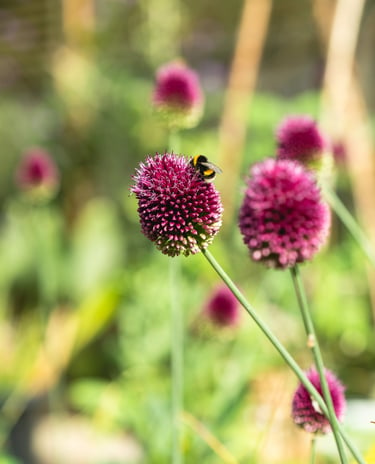
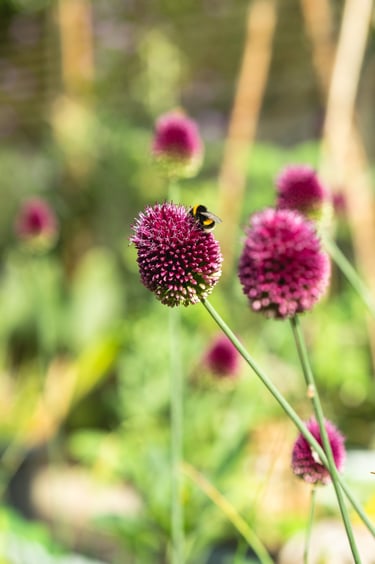
Bumblebees are incredibly efficient pollinators, often found in gardens that offer a wide rang of single and open-flowering plants. To support them, I focus on selecting a succession of pollen-rich species that flower throughout the year - ensuring your garden is both vibrant for you and life-sustaining for them.
Below: A buff-tailed bumblebee collecting nectar and pollen from Allium sphaerocephalon, planted in a mixed vegetable and ornamental bed.
The beauty of a busy garden
Designing for Biodiversity and Seasonal Interest
A modern garden should be a living landscape that works as hard for local wildlife as it does for you. By choosing plants that naturally suit your garden's specific conditions, you can create a sanctuary for essential pollinators like bumblebees and butterflies without compromising on style or practicality.
All photos and images on this page feature designs by Bickley Garden Design.
Designing for the seasons:
Late Winter-Early Spring: Include plants like Mahonia and Ribes to provide vital energy for Queen bumblebees as they emerge from hibernation.
Spring-Summer: Reliable favourites such as Digitalis (foxgloves) and Geranium support the growing nests during their busiest months.
Late Summer-Autumn: Sedum, Echinacea and Verbena ensure the garden remains a rich food source well into the cooler months.
I have been fortunate to receive bumblebee identification training as part of the Buzzing in the East End (BEE) project, allowing me to make informed plant selections in my desigs and help to create vital wildlife corridors across Bromley and South East London.
Informed Insight
Learn more about supporting our pollinators
To find out more about how you can help protect these essential insects, visit the Bumblebee Conservation Trust.
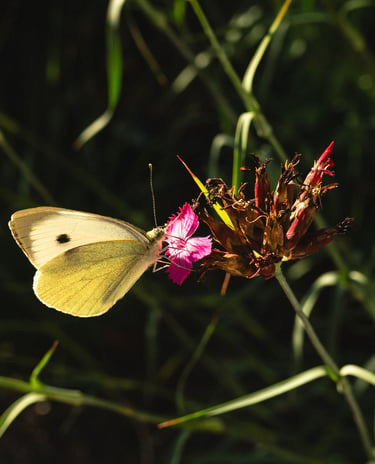
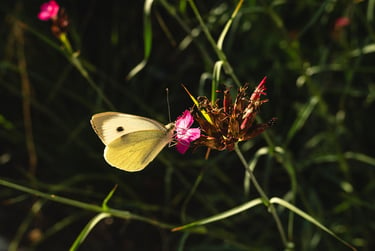
Below: Large white butterflies are generalist feeders, frequenting many wild flowers. Here, a butterfly is feeding on Dianthus carthusianorum planted through a full-sun border.